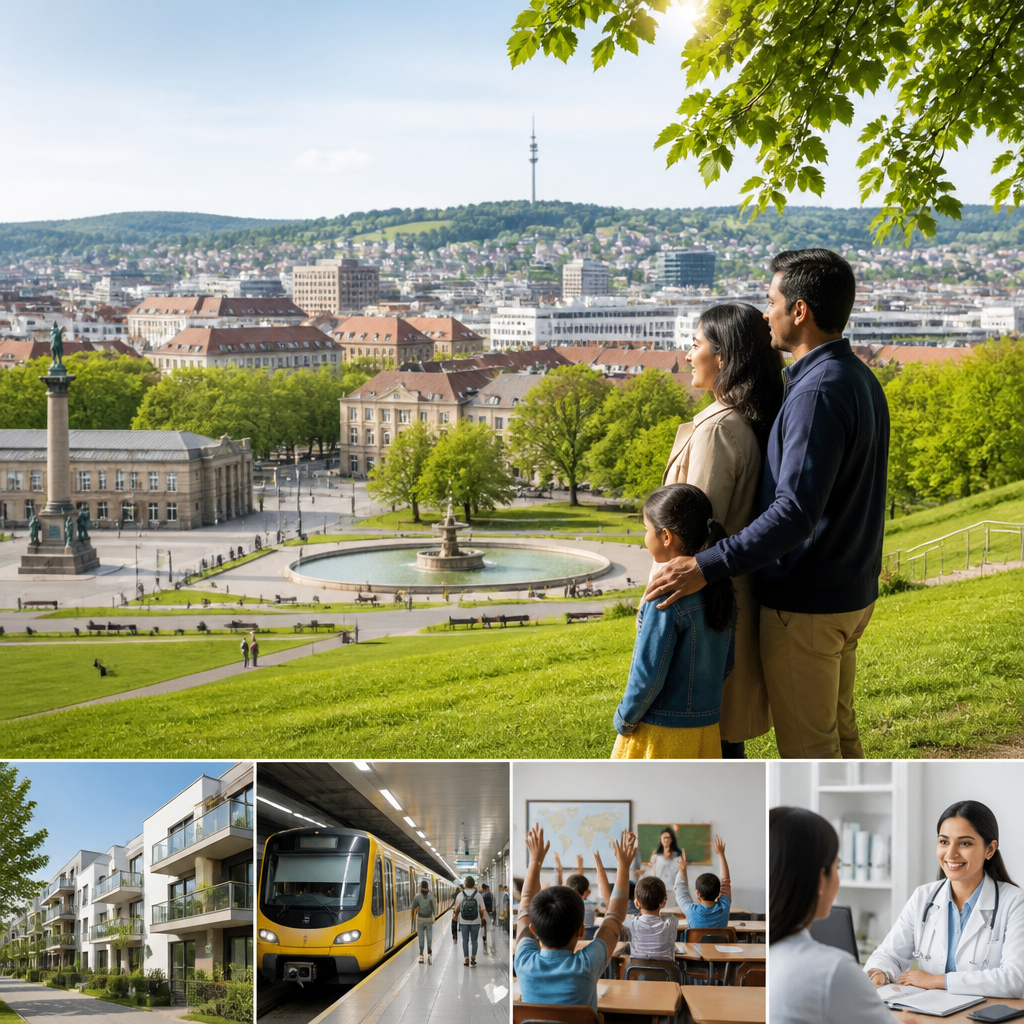
Stuttgart, the capital of Baden-Württemberg and home to Mercedes-Benz and Porsche, offers Indian expats a unique blend of German industrial prowess, cultural richness, and surprising natural beauty. With approximately 600,000 residents spread across valleys, hills, and vineyards, this relatively compact city punches above its weight in quality of life. Around 40% of Stuttgart's population comes from a foreign background, creating a diverse, welcoming environment where Indian professionals can build fulfilling lives while maintaining connections to home.
This guide walks you through every essential aspect of settling into Stuttgart—from your first registration appointment to finding schools, navigating the healthcare system, and connecting with the local Indian community. Unlike a typical German metropolis, Stuttgart's hilly terrain and green spaces create distinct neighbourhoods, each with its own character. Understanding these differences, alongside the city's bureaucratic requirements and practical realities, will help you transition smoothly and make informed decisions about where and how to live.
Understanding Stuttgart's Neighbourhoods: Where Indian Expats Choose to Live
Stuttgart comprises twenty-three inner and outer neighbourhoods, each offering different advantages for expat families and professionals. The city's topography—valleys and hills covered with vineyards—means that location affects not just your commute but your daily lifestyle.
Stuttgart-Mitte: The Cultural and Commercial Heart
Stuttgart-Mitte serves as the city's beating heart and remains one of the most popular choices among expats and foreigners. This neighbourhood thrives with cultural activity and houses important landmarks including the Friedrichsbau Theater and the palace of the old Württemberg Dukes. The Mitte offers a mix of modern apartments and historic buildings, providing convenience for those who want everything within reach.
The area's excellent public transport access makes exploring the rest of Stuttgart straightforward. For Indian professionals working in the city centre or those who prefer urban energy, Mitte provides immediate access to restaurants, entertainment, and nightlife. However, this central location comes with higher rental costs compared to suburban alternatives.
Stuttgart-West: The Artistic Quarter
Located west of the city centre, Stuttgart-West combines a relaxed atmosphere with urban convenience. This neighbourhood has developed a reputation as Stuttgart's hipster area, filled with artsy shops, cozy cafes, local boutiques, and bars. The area features a mix of old and new architecture, creating an eclectic vibe that appeals to younger professionals and creative types.
Stuttgart-West offers several places to eat, drink, and visit, alongside opportunities for work and study. The neighbourhood provides plenty of parks and green spaces, perfect for those who enjoy outdoor activities. Like Mitte, Stuttgart-West ranks among the more expensive areas for rent, but many expats find the community atmosphere and lifestyle worth the premium.
Bad Cannstatt: Industrial Heritage and Festivals
Bad Cannstatt holds special significance as home to the Mercedes-Benz and Porsche museums, making it particularly relevant for Indian expats working in the automotive sector. The neighbourhood also hosts VfB Stuttgart, and organizes two of the largest beer festivals in the city, where thousands gather to celebrate.
This area combines top tourist attractions with residential options, offering a different character from the more central neighbourhoods while maintaining good connectivity to the city.
Degerloch: Family-Friendly Suburban Life
Just a short train ride from the city centre, Degerloch attracts expats with children and families seeking to escape the hustle and bustle while maintaining accessibility. This neighbourhood offers a peaceful, safe area where cycling is practical and community life thrives. The famous Stuttgart cable car provides a distinctive way to explore the area.
For Indian families prioritizing space, safety, and a quieter environment, Degerloch presents an appealing alternative to central locations. The excellent public transport links mean you're not isolated from Stuttgart's urban amenities and employment centres.
Other Neighbourhoods Worth Considering
Vaihingen is another family-friendly neighbourhood known for its community spirit and good schools, offering a suburban feel while remaining well-connected to Stuttgart's centre. The area provides a mix of residential options and practical amenities.
Frauenkopf in East Stuttgart is considered one of the most beautiful residential areas, offering attractive panoramic views that take advantage of the city's hilly topography.
Zuffenhausen features beautiful parks, local shops, and a strong community spirit, making it ideal for expats wanting a family-friendly environment. The public transport links to Stuttgart are excellent, allowing easy access to the city.
Fellbach sits just outside Stuttgart proper, offering a charming suburban lifestyle with fantastic S-Bahn connections to the city centre, making commuting straightforward for work or leisure.
Filderstadt and Leonberg are suburbs beyond Stuttgart's immediate boundaries, ideal for expats who prefer quieter suburban life with spacious homes and plenty of green spaces. Both maintain reliable S-Bahn connections to Stuttgart, allowing you to enjoy lower housing costs while accessing the city's employment and cultural opportunities.
Stuttgart is considered a safe city without particularly dangerous neighbourhoods, giving Indian expats flexibility in choosing where to settle based on lifestyle preferences rather than safety concerns.
Arrival and Registration: Your First Bureaucratic Steps
The Anmeldung: Registering Your Residence
Registration with Stuttgart's authorities—the Anmeldung—is your first mandatory bureaucratic step after arrival in Germany. This registration must be completed, and it forms the foundation for everything else: opening bank accounts, obtaining residence permits, enrolling children in schools, and accessing healthcare.
You'll need to complete your Anmeldung at the local registration office (Bürgeramt or Einwohnermeldeamt). The specific office you visit depends on which Stuttgart neighbourhood you've moved into. The sources for this article do not publish processing times or appointment wait times; check Stuttgart's official city portal for current information about booking appointments and expected timelines.
Documents you'll typically need for Anmeldung:
- Valid passport
- Completed registration form (Anmeldeformular)
- Rental contract or confirmation from your landlord (Wohnungsgeberbestätigung)—this document confirms your landlord's permission for you to register at the address
- If applicable, marriage certificate and children's birth certificates
The Wohnungsgeberbestätigung is particularly important in German bureaucracy. Your landlord must provide this document, and without it, your registration cannot be completed. Ensure you request this from your landlord immediately upon signing your rental agreement.
After successful registration, you'll receive a registration confirmation (Meldebescheinigung), which you'll need for numerous subsequent procedures. Keep multiple copies—you'll be asked for this document repeatedly during your first months in Stuttgart.
Residence Permits and Visa Matters
If you've arrived on a work visa or other long-term visa, you'll need to convert this into a residence permit (Aufenthaltstitel) after arrival. This process involves the Foreigners' Office (Ausländerbehörde) in Stuttgart.
The specific requirements, timelines, and fees for residence permits vary based on your visa category, employment situation, and nationality. The sources for this article do not provide specific processing times or fees for Stuttgart's Foreigners' Office. Check the official Stuttgart city portal or Baden-Württemberg state immigration resources for current requirements and to book appointments.
For detailed guidance on visa categories, documentation requirements, and the application process, refer to Expatskey's dedicated visa and residence permit articles for Germany.
Finding Housing in Stuttgart: Market Realities and Strategies
Finding accommodation in Stuttgart presents challenges similar to other German cities—high demand, competitive markets, and particular local customs—but the task is manageable with the right approach and realistic expectations.
Understanding Stuttgart's Rental Market
Rental prices in Stuttgart are higher compared to many other German cities. The sources indicate that average rent for a one-bedroom apartment in a central area is around one thousand euros, with approximately 800 euros for the same size in the outskirts. Stuttgart's city centre and uptown areas command higher prices than other neighbourhoods.
Stuttgart South and Stuttgart West, alongside the city centre, rank among the most expensive places for rent. To avoid extremely high prices, consider areas outside Stuttgart proper, such as Sindelfingen, Böblingen, and Ruhr, which offer good connections and lower rents.
The sources for this article do not provide specific current rental rates by neighbourhood or apartment size beyond the general figures mentioned above. Rental markets fluctuate, so check current listings on major German housing platforms for up-to-date pricing in your preferred neighbourhoods.
Housing Search Strategies for Indian Expats
Finding accommodation in Stuttgart, like everywhere in Germany, is difficult but not impossible. The city's housing market requires persistence, preparation, and often, a willingness to compromise on location or apartment features.
Online platforms serve as your primary search tools. While the sources mention that online platforms can be your best friend when searching for expat housing in Stuttgart, they do not specify particular platform names or features. Research current German housing platforms that serve the Stuttgart market, including both national sites and any Stuttgart-specific resources.
Key tips for housing searches:
Start early: Begin your search well before your planned move date. German rental markets move slowly, and quality apartments attract multiple applicants.
Prepare your documents: German landlords expect comprehensive documentation including proof of employment, salary statements, SCHUFA credit report (if available), previous landlord references, and copies of identification. Having these ready in a professional folder demonstrates seriousness.
Understand German rental customs: Most German apartments come unfurnished—sometimes without even a kitchen. Budget for furnishing costs and kitchen installation if necessary. "Kaltmiete" refers to base rent without utilities; "Warmmiete" includes utilities. Always clarify which you're discussing.
Consider temporary accommodation first: Many Indian expats find it practical to book temporary accommodation (serviced apartments, Airbnb, or corporate housing) for the first month while conducting in-person apartment viewings. German landlords prefer meeting prospective tenants face-to-face.
Network actively: Join expat groups, company networks, and online forums focused on Stuttgart. Personal connections sometimes yield housing leads before apartments reach public listings.
Be realistic about commute: Stuttgart's excellent public transport system means living in suburban neighbourhoods or nearby towns doesn't isolate you from work or city life. Expanding your geographic search often reveals better value.
The sources recommend getting active in Stuttgart expat forums and enquiring about housing opportunities—community knowledge often provides insights beyond what official listings reveal.
Getting Around: Public Transport in Stuttgart
Stuttgart's public transport system provides reliable connectivity throughout the city and surrounding region, making it practical to live in suburban areas while working in the centre.
Transport Network Overview
The Stuttgart public transport network includes U-Bahn (underground), S-Bahn (suburban rail), buses, and the distinctive Stuttgart cable car. The system connects all major neighbourhoods mentioned in this guide, with particularly good links to suburban areas like Degerloch, Fellbach, Filderstadt, Leonberg, Zuffenhausen, and Vaihingen.
The sources confirm that public transport connections are excellent throughout Stuttgart's neighbourhoods but do not provide specific ticket prices, zone structures, or pass costs. Check the VVS (Verkehrs- und Tarifverbund Stuttgart)—Stuttgart's transport authority—for current fares, zone maps, and pass options.
Practical Transport Considerations
Monthly passes typically offer the best value for daily commuters. The VVS system operates on zones, so your pass cost depends on which zones you travel between regularly.
Mobile ticketing has become standard in German cities. Check whether VVS offers app-based ticket purchases, which simplify buying and validating tickets.
Cycling is practical in some Stuttgart neighbourhoods, particularly flatter areas like Degerloch. However, the city's hilly topography makes cycling challenging in certain districts. Consider your specific neighbourhood's terrain when deciding whether to invest in a bicycle.
Car ownership is common among Stuttgart residents, particularly those working in the automotive industry. However, many Indian expats find that Stuttgart's public transport adequately serves daily needs, with car-sharing services available for occasional requirements.
For comprehensive guidance on German public transport systems, ticketing, and commuting strategies, refer to Expatskey's dedicated transport articles.
Education and Childcare: Schools and Kitas for Indian Families
Stuttgart offers various educational options for Indian expat families, from German public schools to international alternatives.
Understanding the German School System
Baden-Württemberg, Stuttgart's state, operates its own education system within Germany's federal structure. The sources for this article do not provide specific details about Stuttgart's schools, Kitas (kindergartens), enrollment processes, waiting lists, or costs.
What you need to research:
- Public school enrollment procedures and catchment areas for your neighbourhood
- International school options in Stuttgart, their curricula (IB, British, American), and fee structures
- Kita availability and registration processes—waiting lists for childcare can be lengthy in German cities
- After-school care (Hort) options if both parents work full-time
Stuttgart's city portal and education department websites will provide current information about public school enrollment. For international schools, contact them directly for admission requirements, fees, and availability.
Vaihingen and Zuffenhausen are specifically mentioned as neighbourhoods with good schools, making them popular among families. Degerloch's family-friendly reputation also suggests adequate educational infrastructure.
For comprehensive guidance on Germany's education system, school types, enrollment procedures, and childcare options, refer to Expatskey's dedicated education articles.
Healthcare and Insurance: Accessing Medical Services
Mandatory Health Insurance
Health insurance coverage is compulsory in Germany. Costs in the public healthcare system are shared by employer and employee, with premiums deducted automatically from your salary. The premiums can vary between providers, so comparing options is worthwhile.
For most expatriates, the government healthcare plan (gesetzliche Krankenversicherung) will be sufficient, especially for those with families, as it covers dependent family members as well. Some expats, particularly those with higher incomes or specific professional situations, may opt for private health insurance (private Krankenversicherung), but this decision requires careful consideration of long-term implications.
Accessing Healthcare Services in Stuttgart
The sources for this article do not provide specific information about hospitals, clinics, English-speaking doctors, or emergency services in Stuttgart.
What you should research:
- Hospitals and medical centres in your Stuttgart neighbourhood
- English-speaking general practitioners (Hausarzt)—your first point of contact in the German healthcare system
- Specialists and whether your insurance requires referrals
- Emergency numbers and procedures (112 is Germany's emergency number)
- Pharmacies (Apotheke) and emergency pharmacy services
Once you've selected a health insurance provider and received your insurance card, register with a general practitioner near your home. This doctor becomes your primary healthcare contact and provides referrals to specialists when needed.
For comprehensive guidance on German health insurance, choosing between public and private coverage, and navigating the healthcare system, refer to Expatskey's dedicated healthcare articles.
Money and Banking: Financial Setup in Stuttgart
Setting up your financial life in Germany requires opening a local bank account, understanding the German banking system, and managing cross-border financial obligations.
Opening a Bank Account
German banks typically require your registration confirmation (Meldebescheinigung) before opening an account, which is why completing your Anmeldung promptly is essential. The sources for this article do not provide specific information about banks in Stuttgart, account types, fees, or services.
Research these banking considerations:
- Which banks operate in Stuttgart and offer services in English
- Account types and monthly fees
- Online banking and mobile app functionality
- International transfer options and costs for sending money to India
- Whether the bank offers services relevant to expats (multi-currency accounts, English-speaking staff)
Many Indian expats also maintain specialized services for India-Germany money transfers, as traditional banks often charge high fees for international transfers.
Tax Obligations
As a resident in Germany, you'll be subject to German income tax, which is automatically deducted from your salary if you're employed. The German tax system is complex, and many expats benefit from consulting a tax advisor (Steuerberater), particularly in their first year.
The sources for this article do not provide specific tax rates, filing deadlines, or procedures for Stuttgart or Baden-Württemberg. For detailed guidance on German taxation, filing requirements, and tax optimization strategies for expats, refer to Expatskey's dedicated tax and finance articles.
Working in Stuttgart: Employment and Professional Life
Stuttgart's economy centres on automotive manufacturing, with Mercedes-Benz and Porsche headquartered here, alongside numerous suppliers and engineering firms. This industrial strength attracts Indian professionals, particularly engineers, IT specialists, and manufacturing experts.
Employment Landscape
The city's developed economy offers good work-life balance, combining professional opportunities with a calm and natural environment surrounded by hills and valleys. Stuttgart-West specifically offers many opportunities to work and study, alongside residential options.
The sources for this article do not provide specific information about job markets, salary ranges, major employers beyond the automotive giants, or employment procedures in Stuttgart.
Consider researching:
- Your industry's presence in Stuttgart beyond automotive
- Professional networking groups and industry associations
- German workplace culture and expectations
- Language requirements for your field—while many international companies operate in English, German proficiency often accelerates career advancement
For comprehensive guidance on working in Germany, understanding employment contracts, workplace rights, and professional development, refer to Expatskey's dedicated employment articles.
Daily Life and Culture: Settling into Stuttgart
The Indian Community and Cultural Connections
Stuttgart's diverse population, with 40% of residents coming from foreign backgrounds, includes an established Indian community. Maintaining cultural connections while settling into German life helps many expats feel at home.
Indian Dining Options
Stuttgart offers several authentic Indian restaurants serving the expat community's culinary needs.
These establishments provide not just familiar flavours but also serve as informal community gathering points where Indian expats connect and share experiences.
Cultural Activities and Festivals
Bad Cannstatt hosts two of Stuttgart's largest beer festivals, where thousands gather to celebrate. While these are German traditions, many expats participate as part of integrating into local culture.
The Mitte neighbourhood offers some of the best clubs in the city for those who enjoy nightlife, while Stuttgart-West's artsy shops and bars create a different social atmosphere.
Stuttgart's location in southern Germany also provides easy access to other European destinations, making it practical to explore the continent during holidays while maintaining your base in the city.
Climate and Lifestyle Considerations
Stuttgart's climate is temperate, with four distinct seasons. Winters can be cold with occasional snow, while summers are generally warm. The city's hilly terrain and surrounding vineyards create a greener environment than typical industrial cities, offering numerous opportunities for outdoor activities and weekend excursions.
The German concept of Feierabend—the clear separation between work and personal time—is strong in Stuttgart, supporting the work-life balance the city is known for. Many Indian expats find this cultural difference refreshing, though it requires adjustment from work cultures where boundaries between professional and personal time are more fluid.
Practical Tips for Your First Months
Language matters: While many Stuttgarters speak English, particularly in international companies, daily life becomes significantly easier with German language skills. Consider enrolling in German courses (Integrationskurs or private language schools) soon after arrival.
Bureaucracy requires patience: German administrative processes follow specific procedures and timelines. Bring patience, keep copies of all documents, and don't hesitate to ask for clarification when requirements seem unclear.
Build your network early: Join expat groups, professional associations, and community organizations. These connections provide practical advice, social opportunities, and often help with challenges that official resources don't address.
Embrace local customs gradually: You don't need to abandon your Indian identity to succeed in Stuttgart, but understanding and respecting German customs—punctuality, direct communication, recycling protocols, quiet hours in residential buildings—helps you integrate smoothly.
Stay connected to home: Modern technology makes maintaining connections to India straightforward. However, also invest time in building your life in Stuttgart rather than living entirely in an Indian bubble. Balance is key to a fulfilling expat experience.
Moving Forward: Your Stuttgart Journey
Stuttgart offers Indian expats a distinctive German experience—industrial strength combined with natural beauty, cultural richness alongside suburban tranquility, and professional opportunities within a manageable city scale. The city's diversity means you're joining an established expat community while contributing to Stuttgart's ongoing international character.
Your first months will involve bureaucratic procedures, housing searches, and practical adjustments. These challenges are temporary. Once established, Stuttgart's quality of life, strong economy, and central European location create an excellent foundation for both career development and family life.
This guide has oriented you to Stuttgart's major aspects—from neighbourhoods and registration to healthcare, education, and community. For deeper exploration of specific topics, refer to Expatskey's dedicated articles covering visas, employment, taxation, education, and healthcare in detail. Each topic deserves thorough research based on your particular situation and priorities.
Welcome to Stuttgart. Your journey in Germany's automotive capital begins with preparation, continues with persistence, and ultimately rewards you with a rich expat experience in one of southern Germany's most dynamic cities.