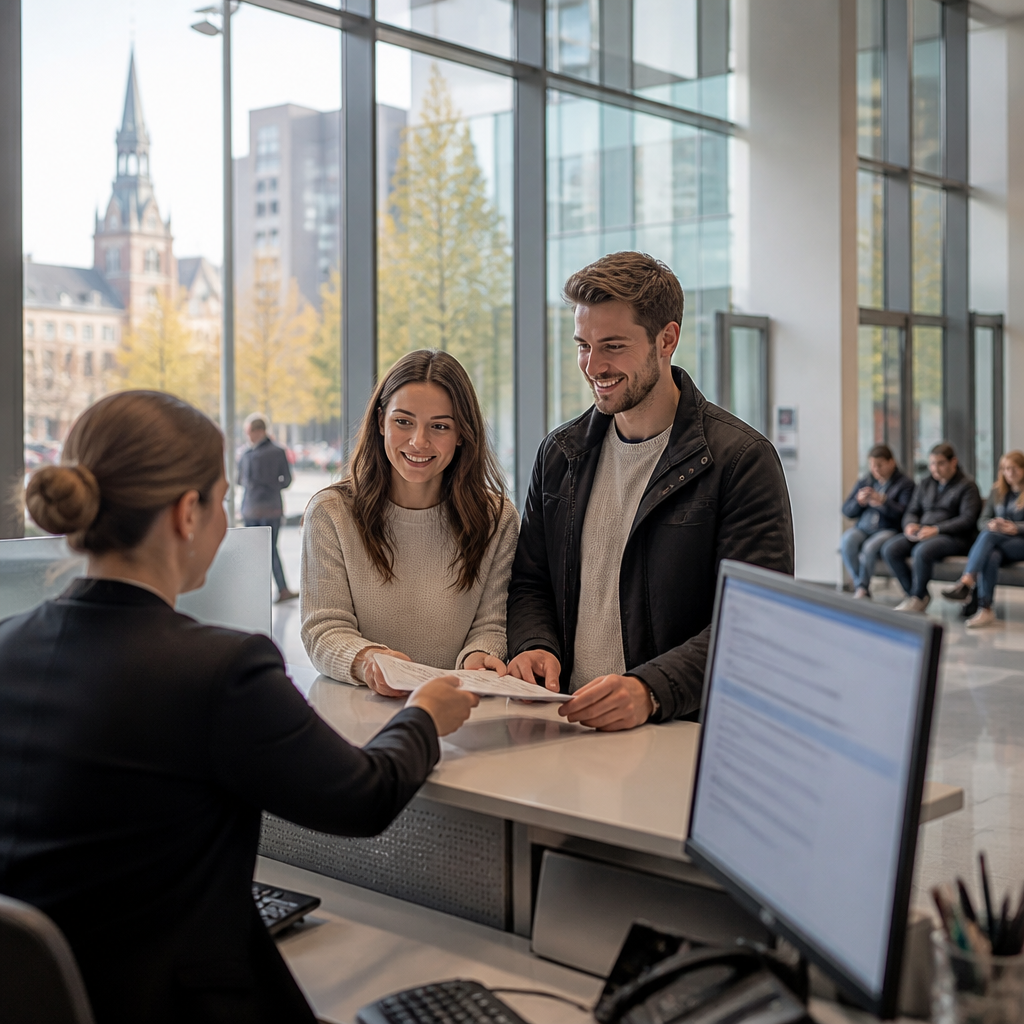
Dortmund, North Rhine-Westphalia's vibrant economic and cultural hub, has quietly become one of Germany's most liveable cities for international professionals and families. For Indian expats, this means a city that combines career opportunities in technology, logistics, and engineering with a manageable cost of living, excellent transport links, and a growing South Asian community. Unlike the frenetic pace of Frankfurt or Munich's eye-watering rents, Dortmund offers something increasingly rare in modern Germany: space to breathe, both literally and financially.
This guide walks you through every essential step of settling into Dortmund—from your first registration appointment to finding your community, navigating healthcare, and understanding the rhythms of daily life. Think of it as the handbook you wish someone had handed you at the airport.
Arrival and Registration: Your First Two Weeks in Dortmund
The Anmeldung: Germany's Non-Negotiable First Step
Anyone who moves to Dortmund from another country or another German city must register their address at the Citizens Services (Bürgerdienste) within two weeks of moving in. This deadline is enshrined in § 17 of the Bundesmeldegesetz (Federal Registration Act) and applies regardless of nationality. Miss it, and you risk fines—but more importantly, you cannot open a bank account, receive your tax identification number, register for health insurance, or complete most employment onboarding processes without this document.
The registration process is called Anmeldung, and it produces a document called the Meldebescheinigung (registration confirmation). This single piece of paper becomes your proof of address for virtually everything that follows.
Who Must Register in Person?
Anyone over 16 years of age is personally obligated to register. For children under 16, the parent or guardian in whose home they live must register them. Newborns who are taken into their parents' already-registered home do not need separate registration—the registry office (Standesamt) notifies the registration authority directly.
If you are a citizen of a country outside the European Union, you must register at the Bürgerdienste International (International Citizens Services), not the general Citizens Services office.
What You Must Bring to Your Registration Appointment
The official sources specify the following documents:
1. Proof of Identity
- Your passport (mandatory for all non-EU citizens)
- Your personal identity card (if you are an EU citizen)
2. Wohnungsgeberbestätigung (Landlord's Confirmation of Residence) This is a signed form from your landlord confirming your address and move-in date. It is absolutely essential—the Bürgerdienste cannot complete your registration without it. Your landlord must sign this form before you attend your appointment. If you live in a student dormitory, this document should be provided when you sign your rental contract; keep it safe.
3. Completed Registration Form The form (Anmeldeformular) can be downloaded in advance from the City of Dortmund's website at dortmund.de/services/wohnsitzanmeldung.html. Filling it out before your appointment saves time.
4. Family Documents (If Applicable) If you are moving with a spouse or children, you must bring documents proving your family relationship:
- Marriage certificate (if married outside Germany)
- Birth certificates for any children under 18 born outside Germany
These documents must be translated and stamped by an officially certified translator in Germany (öffentlich bestellter und beeidigter Dolmetscher). Bring both the original document and the certified German translation.
5. Residence Permit or Visa If you hold a residence permit or visa, bring it so the new address can be noted.
Booking Your Appointment
Registration takes place at the Bürgerdienste offices in Dortmund. The main office is the Dienstleistungszentrum Innenstadt (Service Centre City Centre) at Südwall 2-4, 44137 Dortmund. You can reach them by phone at +49 231 50-29831, +49 231 50-29837, or +49 231 50-26333, or by email at [email protected].
Appointments can be booked in person, by phone, or increasingly online. In large German cities, appointment slots can be booked out for weeks, so start this process as soon as you have a confirmed address. Importantly, if you cannot secure an appointment within the two-week deadline, making the appointment itself is generally considered sufficient to meet the legal obligation—but do not delay unnecessarily.
The Appointment Itself
Arrive early with all your documents. Each person over 16 must attend in person unless you provide a signed power of attorney (Vollmacht) for someone to represent you. The staff member will review your documents, enter your details into the system, and issue your Meldebescheinigung on the spot.
If you hold a German identity card or an eID card for EU citizens, remind the staff to update the chip on your card with your new address. This step is sometimes overlooked, and without it, your card will still show your old address.
After Registration: What Happens Next
Once registered, several systems activate automatically:
- Tax Identification Number (Steuer-ID): The tax office (Finanzamt) will mail your Steuer-ID to your registered address within a few weeks. This 11-digit number is permanent and required for employment, banking, and tax filings.
- Notification to Your Previous Address: If you moved from another German city, your new Bürgerdienste will automatically notify your old registration office. You do not need to de-register from your previous address.
Online Registration: A New Option (With Limitations)
Since October 2024, Germany has introduced an online registration service via the BundID portal. However, this is only available if:
- You are an EU citizen
- You hold a valid German eID (electronic identity card)
- You have a BundID account
- You are moving within Germany (not arriving from abroad)
If you are registering in Dortmund for the first time from outside Germany, you must register in person. The City of Dortmund's portal notes that once you begin the online process, you must complete it within ten minutes for security reasons; after that, you must appear in person.
Moving Again? The Ummeldung Process
If you move to a new address within Dortmund, you must notify the Bürgerdienste of your new address within two weeks. This is called an Ummeldung (change of address). The process is identical to your initial registration: book an appointment, bring your Wohnungsgeberbestätigung for the new address, and update your documents.
If you move to a different city in Germany, you only need to register at your new city's Bürgeramt—they will notify Dortmund automatically.
Leaving Germany: The Abmeldung
If you are leaving Germany permanently, you must de-register (Abmeldung) within two weeks of your departure. This can sometimes be done in writing or online, depending on the municipality, but check with the Bürgerdienste for Dortmund's specific process.
Visas and Residence Permits: Staying Legal in Dortmund
Once you have registered your address, your next step—if you are not an EU citizen—is to secure or extend your residence permit. This is handled by the Ausländerbehörde (Foreigners' Office), and your registration certificate is a prerequisite for almost every visa-related appointment.
Where to Start
The official sources for this guide do not detail the specific procedures, fees, or processing times for residence permits in Dortmund. For authoritative, current information, contact the City of Dortmund's Foreigners' Office directly or consult their official portal at dortmund.de. Processing times, required documents, and fees vary significantly depending on your visa category (Blue Card, work permit, family reunification, student visa, etc.), and these details change periodically.
What to Prepare
Regardless of your visa type, expect to provide:
- Your Meldebescheinigung (proof of registration)
- Your passport and current visa or residence permit
- Proof of employment or university enrolment
- Proof of health insurance
- Proof of adequate financial means (bank statements, employment contract, scholarship letter)
- Passport photos (biometric standard)
If your documents are not in German or English, certified translations will likely be required.
Common Pitfalls
Start your visa extension process early—ideally two to three months before your current permit expires. Appointment availability can be limited, and processing times are unpredictable. If your permit expires while your extension is pending, you will receive a Fiktionsbescheinigung (fictional certificate), which allows you to remain in Germany legally while the decision is made. However, this certificate may not permit travel outside Germany, so plan accordingly.
Housing: Finding Your Home in Dortmund
The Rental Market: What to Expect
Dortmund's rental market is significantly more accessible than Munich, Frankfurt, or Hamburg. The official sources for this article do not publish average rental prices, but you should check current listings on platforms like ImmobilienScout24, WG-Gesucht (for shared flats), and local Facebook groups to budget accurately. Rental costs vary widely depending on neighbourhood, apartment size, and condition.
The Wohnungsgeberbestätigung: Your Landlord's Signature
Before you can register your address, your landlord must provide the Wohnungsgeberbestätigung. This is a legal requirement under § 19 of the Bundesmeldegesetz. Some landlords are unfamiliar with this form or reluctant to provide it quickly—clarify this requirement before signing your lease, and request the form as soon as you move in.
Deposits and Contracts
German rental contracts (Mietvertrag) typically require a security deposit (Kaution), but the official sources here do not specify a standard amount. The landlord must hold this deposit in a separate, interest-bearing account and return it (minus any legitimate deductions for damage) when you move out.
Read your contract carefully. Note the notice period for termination (typically three months), rules about subletting, and any clauses about renovations or repairs. If the contract is in German and you are not fluent, have it reviewed by a German-speaking friend or a legal advisor before signing.
Utilities and Internet
Rental prices in Germany are often quoted as "Kaltmiete" (cold rent, excluding utilities) or "Warmmiete" (warm rent, including utilities). Clarify which applies. Utility costs (Nebenkosten) typically cover water, heating, building maintenance, and rubbish collection. Electricity and internet are usually billed separately.
For internet, providers like Deutsche Telekom, Vodafone, and 1&1 offer contracts with varying speeds and prices. The official sources do not publish cost ranges, so compare current offers directly on provider websites or comparison portals like Check24.
Work and Employment: Navigating the German Workplace
Registering for Tax and Social Security
Once you have your Meldebescheinigung and Steuer-ID, your employer will register you with the appropriate social security and tax authorities. Germany's social security system is funded through contributions split between employer and employee, covering health insurance, pension insurance, unemployment insurance, and long-term care insurance.
The official sources for this guide do not specify the exact contribution rates, as these are set nationally and adjusted periodically. For current rates, consult the Federal Ministry of Labour and Social Affairs (bmas.de) or your employer's HR department.
Understanding Your Payslip
Your monthly payslip (Gehaltsabrechnung) will show your gross salary (Bruttogehalt), deductions for taxes and social insurance, and your net salary (Nettogehalt). Common deductions include:
- Income tax (Einkommensteuer)
- Solidarity surcharge (Solidaritätszuschlag)
- Health insurance (Krankenversicherung)
- Pension insurance (Rentenversicherung)
- Unemployment insurance (Arbeitslosenversicherung)
- Long-term care insurance (Pflegeversicherung)
The difference between gross and net can be substantial. For precise calculations based on your salary and tax class, use online tools like brutto-netto-rechner.info, but verify the figures with your employer.
Tax Classes and Filing
Your tax class (Steuerklasse) determines how much income tax is withheld from your salary. The most common classes for expats are:
- Class I: Single, no children
- Class III/V: Married couples where one partner earns significantly more
- Class IV/IV: Married couples with similar incomes
You may be required to file an annual tax return (Steuererklärung), especially if you have multiple income sources, significant deductions, or are in certain tax classes. Many expats hire a tax advisor (Steuerberater) or use software like WISO or Taxfix for this. The official sources do not specify fees for tax advisory services; check directly with local advisors in Dortmund.
Money and Banking: Setting Up Your Financial Life
Opening a Bank Account
Your Meldebescheinigung is mandatory for opening a German bank account. Most banks also require your passport and, for non-EU citizens, your residence permit.
Popular banks for expats include:
- Traditional banks: Sparkasse Dortmund, Deutsche Bank, Commerzbank (branch access, in-person service)
- Online banks: N26, DKB, ING (no branch fees, English-language apps)
The official sources do not publish account fees or minimum balance requirements, as these vary by bank and account type. Compare current offers on bank websites or comparison portals.
Blocked Accounts for Students and Visa Applicants
If you are applying for a student visa or certain residence permits, you may need a blocked account (Sperrkonto) to prove financial means. Providers like Fintiba and Deutsche Bank offer these accounts. The required minimum balance is set by the Federal Foreign Office and changes periodically—check the current figure on germany.info or your visa application guidelines.
Sending Money to India
For remittances to India, services like Wise (formerly TransferWise), Remitly, and Western Union offer competitive exchange rates and low fees. The official sources do not specify costs, so compare live rates on provider websites before transferring.
Healthcare: Staying Healthy in Dortmund
Mandatory Health Insurance
Health insurance is mandatory in Germany. You must choose between:
- Public health insurance (Gesetzliche Krankenversicherung, GKV): Covers most residents, with contributions based on income. Major providers include TK (Techniker Krankenkasse), AOK, and Barmer.
- Private health insurance (Private Krankenversicherung, PKV): Available to high earners, self-employed individuals, and civil servants. Premiums are based on age, health, and coverage level.
The official sources for this guide do not specify contribution rates or premium costs, as these vary by provider and income. For public insurance, contact providers directly or use comparison tools like krankenkassen.de. For private insurance, consult a broker.
Registering with a Doctor
Once insured, you can register with a general practitioner (Hausarzt). Bring your insurance card (Versichertenkarte) to your first appointment. In Germany, you typically see your Hausarzt first for most health issues; they refer you to specialists if needed.
For urgent but non-life-threatening issues outside office hours, call 116 117 (the national on-call medical service). For emergencies, call 112 for an ambulance or go directly to a hospital emergency room (Notaufnahme).
Pharmacies and Prescriptions
Pharmacies (Apotheken) are widely available. Prescription medications (verschreibungspflichtige Medikamente) require a prescription (Rezept) from your doctor. Some over-the-counter medications common in India may require a prescription in Germany, or vice versa—ask your pharmacist.
Education and Childcare: Options for Families
Childcare (Kita)
Germany offers public and private childcare (Kindertagesstätte, or Kita) for children from infancy to school age. Demand often exceeds supply, especially for children under three, so register as early as possible—ideally during pregnancy or immediately after moving to Dortmund.
The official sources do not specify Kita fees, as these are income-based and vary by municipality and provider. Contact the City of Dortmund's Youth Welfare Office (Jugendamt) or individual Kitas for current information.
Schools
Germany's school system is public and free, but it is complex, with children typically sorted into different school tracks (Gymnasium, Realschule, Hauptschule) after primary school (Grundschule). For Indian expat families, international schools or bilingual programs may be preferable to ease the transition and maintain English-language education.
The official sources do not list specific schools or fees in Dortmund. Research options through the City of Dortmund's education department or expat community groups.
Transport: Getting Around Dortmund
Public Transport
Dortmund's public transport network, operated by DSW21, includes buses, trams (Stadtbahn), and regional trains. The system is integrated into the VRR (Verkehrsverbund Rhein-Ruhr) network, covering the entire Ruhr region.
The official sources do not specify ticket prices, as these depend on zones and ticket type (single, day pass, monthly subscription). Check current fares at dsw21.de or the VRR app.
Cycling
Dortmund is increasingly bike-friendly, with expanding cycle lanes and bike-sharing schemes. If you plan to cycle regularly, register your bike with the police (Fahrradcodierung) to deter theft.
Driving
If you hold an Indian driving licence, you can drive in Germany for up to six months. After that, you must convert your licence to a German one (Führerschein). The process involves a written and practical driving test, as Indian and German licences are not directly exchangeable. Driving schools (Fahrschulen) in Dortmund can guide you through this. The official sources do not specify the cost of driving lessons or tests; contact local driving schools for quotes.
Culture and Daily Life: Finding Your Rhythm
The Indian Community in Dortmund
Dortmund's Indian community is smaller than in larger cities like Frankfurt or Berlin, but it is growing and welcoming. Look for community groups on Facebook (e.g., "Indians in Dortmund"), WhatsApp groups, and events organized around festivals like Diwali, Holi, and Onam.
Indian Groceries and Restaurants
For Indian groceries, Dortmund offers several well-stocked shops:
For dining out, Dortmund has a handful of Indian restaurants serving regional cuisines:
Language and Integration
While many expats manage with English in professional settings, learning German is essential for daily life, bureaucratic tasks, and true integration. The City of Dortmund and organizations like the Volkshochschule (VHS) offer German courses at various levels. The official sources do not specify course fees; check vhs-dortmund.de for current offerings.
Quiet Hours and Sundays
Germany takes quiet hours (Ruhezeiten) seriously. Typically, you must avoid loud noise between 10 PM and 6 AM on weekdays, and all day on Sundays and public holidays. This includes vacuuming, drilling, loud music, and even mowing the lawn. Respect these rules to maintain good relations with neighbours.
Most shops are closed on Sundays, except for bakeries (until around noon) and petrol stations. Plan your grocery shopping accordingly.
Recycling
Germany's recycling system (Mülltrennung) is rigorous. Separate your waste into:
- Restmüll (general waste, black bin)
- Biomüll (organic waste, brown bin)
- Papier (paper and cardboard, blue bin)
- Gelber Sack (packaging with the Green Dot symbol, yellow bag)
- Glass (sorted by colour at public collection points)
Your landlord or building management will explain the system. Follow it—fines for incorrect disposal are common.
Final Thoughts: Making Dortmund Home
Settling into Dortmund is a process, not an event. The first few weeks will feel dense with appointments, forms, and unfamiliar systems. But once you have your registration certificate, your bank account, your residence permit, and your bearings, the city opens up. You will discover the quiet charm of the Westfalenpark, the energy of the Kreuzviertel neighbourhood, the weekend markets, the surprising quality of the local football culture (yes, Borussia Dortmund is more than a team—it is a civic religion), and the reassuring rhythm of a city that works.
Dortmund is not Berlin's edgy chaos or Munich's polished expense. It is something rarer: a functional, affordable, genuinely liveable city where you can build a life without burning out. For Indian expats, that is not a small thing. It is everything.
Welcome to Dortmund. Take your time. You are home now.